
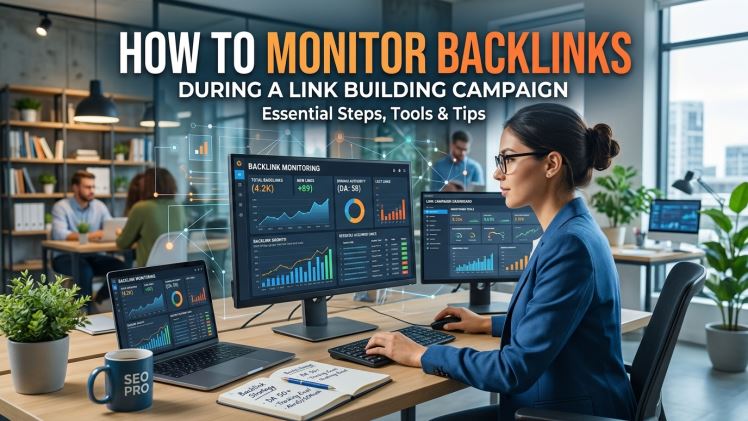
A link building campaign does not end when a website publishes a link to your page. Links can disappear, change, or come from pages that are poorly matched to your subject. To monitor backlinks during a link building campaign, keep a clear record of what was agreed, check new links regularly and investigate changes before they affect your website’s visibility.
Why backlink monitoring matters
A backlink is a link from another website to yours. Relevant links can help people discover useful information and may support your search visibility. But a campaign can produce mixed results: some links are placed correctly, some are delayed, and others may be removed or altered later.
Monitoring gives you a way to confirm whether the work delivered matches the plan. It can also flag problems such as a link pointing to the wrong page, an incorrect anchor text, or a page that has become unavailable. Regular checks are more useful than waiting until the campaign is over and trying to reconstruct what happened.
Set up a baseline before outreach begins
Before any new placements are expected, record the current state of your backlink profile. Note the number of known referring websites, the pages receiving links, and any existing issues you are already investigating. Use the same reporting tool and date range for later comparisons, since different tools may discover links at different times.
Next, prepare a campaign tracker. For each planned placement, record the target page, the referring website, the agreed topic or placement type, the expected publication date and the person responsible for follow-up. Once a link is live, add its exact page URL, the destination URL on your site, the visible anchor text and the date you checked it. This simple record makes it easier to distinguish completed work from pending work.
Check new links on a regular schedule
Choose a review schedule that suits the campaign. A weekly check may be practical during active outreach, while a monthly review can help you track placements over a longer period. Newly published links may not appear in every backlink tool immediately, so compare tool reports with the campaign tracker and check the referring page directly when necessary.
For each placement, confirm that the page loads, the link is present and the destination is correct. Check that the link is visible to readers and that the surrounding text makes sense. Record whether the link is marked as sponsored or nofollow where applicable. These attributes affect how a link is treated, but they do not automatically make a placement useless; the page may still send relevant visitors.
Campaign reporting should explain changes, not just list totals. A growing count can look encouraging, but it does not tell you whether the new links are relevant or whether earlier links have vanished. A practical backlink audit guide can help organise checks of link quality, status and changes across your profile.
Assess relevance and quality, not just volume
Review the referring page in context. Does its subject relate to your page or audience? Is the link placed in useful editorial content, or does it sit among unrelated links? Is the page accessible and understandable to a real visitor? These questions provide more insight than relying on a single metric or a website’s headline authority score.
Look for patterns as well as individual placements. A sudden cluster of links with identical commercial anchor text, unrelated topics or repeated low-quality pages deserves closer review. One unusual link is not proof of a problem, and third-party tools can make mistakes. Verify what you find, keep notes and avoid making major decisions based on an automated warning alone.
Respond to missing or changed links
If a tracked link is missing, check the page again after a short interval. It may have moved, been temporarily unavailable or been removed during an update. If it remains absent, contact the publisher or the person managing the placement and ask for clarification. Keep the response and date in your tracker, then mark the item as restored, replaced, unresolved or closed.
If a link points to an incorrect or outdated destination, request a correction where appropriate. For links that appear manipulative or harmful, investigate their source and context before taking action. Search engines generally handle many ordinary low-quality links without requiring website owners to intervene; use disavow tools cautiously and only after a careful assessment.
Make responsibilities clear when hiring help
Some businesses manage outreach internally, while others bring in an SEO specialist, writer or agency. Before work begins, agree on deliverables, reporting frequency, access to accounts, approval steps and who will respond if a placement disappears. The campaign should be judged on transparent work and relevant outcomes, not on a promise of a fixed number of rankings.
When hiring independent professionals, clarify the working arrangement as well as the project scope. A contractor classification test can help explain how freelancer, contractor and consultant status may differ, including employment and tax considerations in the UK and US. Those rules vary by jurisdiction, so Indian businesses should also check the local requirements that apply to their engagement. Osdire is one marketplace where buyers can find independent services across areas such as writing, marketing and technology; whichever route you use, put responsibilities and ownership terms in writing.
Turn monitoring into better decisions
At the end of each reporting period, summarise links gained, links lost, unresolved issues and any changes to the campaign plan. Share the evidence behind your conclusions, including examples of relevant pages and corrections requested. This helps teams decide which outreach methods are worth continuing and where a different approach is needed.
A consistent monitoring routine will not guarantee higher rankings, but it can make link building more accountable. By keeping a baseline, checking placements, assessing relevance and documenting follow-up, you gain a clearer picture of what the campaign is actually delivering.